
Keywords
Actor-Network Theory
Bureaucracy
Statehood
Public Administration
USSR
Political Class
Digitalization
Electronic Government
Administrative Reform
How to Cite
Abstract
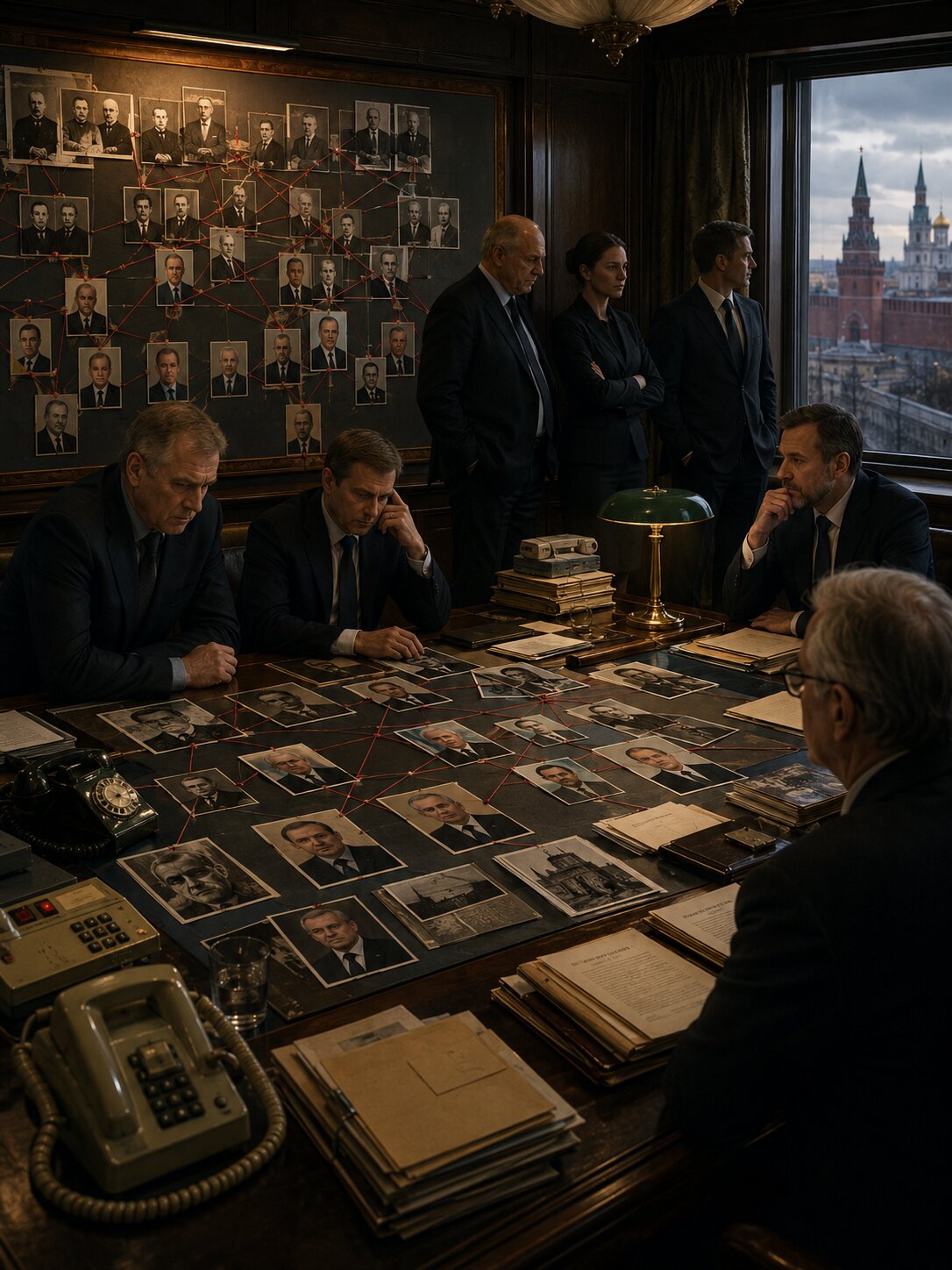
The article examines the problem of sustainability and transformation of Russian administrative practices in the context of institutional reforms, digitalization and updating of personnel mechanisms. The problem lies in the fact that modern public administration is often described either through the language of technological modernization or through criticism of bureaucratic inertia, while the internal logic of reproduction of managerial practices and their historical rootedness remains in the shadow. The Russian case demonstrates that the new ways of organizing power do not arise from scratch, but unfold within long-standing structures that retain the features of the previous administrative logic. The purpose of the study is to identify how the models of power organization inherited from the Soviet era are preserved, adapted, and re-formed in the structure of the modern Russian political class and bureaucratic “apparatus” using the methodology of B. Latour’s actor-network theory. As a result of the research, it is shown that the Soviet bureaucracy developed as a relatively autonomous system of political and administrative domination based on the interweaving of formal hierarchy, the nomenclature principle, patronage relations and mechanisms of closed personnel reproduction. It has been established that in the post-Soviet period, these principles did not disappear, but were integrated into new management contours, including digital platforms, personnel competitions, interdepartmental interactions, evaluation procedures and modern administrative control technologies. It is concluded that the Russian political class and the associated administrative apparatus should be considered as a hybrid actor-network configuration in which power relations are supported by the interaction of people, institutions, documents, digital technologies, symbolic practices and organizational routines. This perspective makes it possible to describe continuity not as a simple preservation of Soviet forms, but as a process of their constant translation, reassembly, and incorporation into new management networks.
References
Andriyanov, V. D. (2011). Bureaucracy, Corruption, and the Effectiveness of Public Administration: History and the Present. Wolters Kluwer. (In Russian).
Bloor, D. (2017). Anti-Latour. Philosophical Literary Journal Logos, 27(1), 85–131. https://doi.org/10.22394/0869-5377-2017-1-85-131 (In Russian).
Callon, M. (2017). Some Elements of a Sociology of Translation: Domestication of the Scallops and the Fishermen of Saint-Brieuc Bay. Philosophical Literary Journal Logos, 27(2), 49–90. https://doi.org/10.22394/0869-5377-2017-2-49-90 (In Russian).
Durkheim, É. (1995). Sociology: Its Subject Matter, Method, and Purpose. Kanon. (In Russian).
Fedotova, V. G. (2007). The subject of the social sciences and humanities. In Contemporary Philosophical Problems of the Natural, Technical, Social Sciences and Humanities (pp. 491–494). Gardariki. (In Russian).
Foucault, M. (2022). Discipline and Punish: The Birth of the Prison. Ad Marginem. (In Russian).
Issues in Creating E-Government and Transferring Public Services into Electronic Form: Educational and Methodological Materials for a Short-Term Professional Development Programme (Vol. 1). (2012). Institute for Training Personnel in State and Municipal Administration, RANEPA. (In Russian).
Ivanov, A. (2022). Mythology of a Bright Future: The Russian State’s Response to the Public Demand for Justice. Logos et Praxis, (1), 22–29. https://doi.org/10.15688/lp.jvolsu.2022.1.3 (In Russian).
Khlevniuk, O., & Gorlizki, Y. (2024). Secretaries: Regional Networks in the USSR from Stalin to Brezhnev. New Literary Observer. (In Russian).
Krasheninnikov, P. V. (2026). The Golden Dream of Bureaucracy: The State and Law of the Era of Stagnation (1964–1985). Eksmo. (In Russian).
Kupryashin, G. L. (2012). Modernisation of Public Administration: Institutions and Interests. Moscow University Press. (In Russian).
Latour, B. (2020). Reassembling the Social: An Introduction to Actor-Network-Theory. HSE Publishing House. (In Russian).
Marcuse, H. (1994). One-Dimensional Man. Refl-book. (In Russian).
Mosca, G. (2023). The Ruling Class. KnoRus. (In Russian).
Obolonsky, A. V. (2015). An Essay on the History of the Russian and Soviet Bureaucratic Nomenclature. Public Administration Issues, (3), 145–164. (In Russian).
Pareto, V. (2024). Socialist Systems. RIOR. (In Russian).
Skiperskikh, A. V. (2024). From “Village Council” to “Technocrats”: Legitimation of the Political Elites of Lipetsk Oblast Under Igor Artamonov. Tomsk State University Journal of Philosophy, Sociology and Political Science, (79), 282–297. https://doi.org/10.17223/1998863Х/79/25 (In Russian).
Stas, I. N. (Ed.). (2025). Soviet Departmentalism: A Collective Monograph. New Literary Observer. (In Russian).
Voslensky, M. S. (2019). Nomenklatura: The Ruling Class of the Soviet Union. Direkt-Media. (In Russian).
Weber, M. (2019). Economy and Society: An Outline of Interpretive Sociology. Domination. HSE Publishing House. https://doi.org/10.17323/978-5-7598-1516-7 (In Russian).
Zemlyanskiy, D., Chuzhenkova, V., Abdullaev, A., Kalinovsky, L., Medvednikova, D., & Prusikhin, O. (2024). Features and Problems of Implementation of Individual Socio-Economic Development Programs of the Subjects of the Russian Federation. Public Administration Issues, (4), 44–78. https://doi.org/10.17323/1999-5431-2024-0-4-44-78 (In Russian).

This work is licensed under a Creative Commons Attribution 4.0 International License.
Copyright (c) 2026 Andrey G. Ivanov, Aleksey A. Tselykovskiy