
Ключевые слова
карнавализация
Бахтин
антигерой
супергеройский фильм
массовая культура
гротескное тело
культурная трансгрессия
инверсия иерархий
смеховая культура
Как цитировать
Аннотация
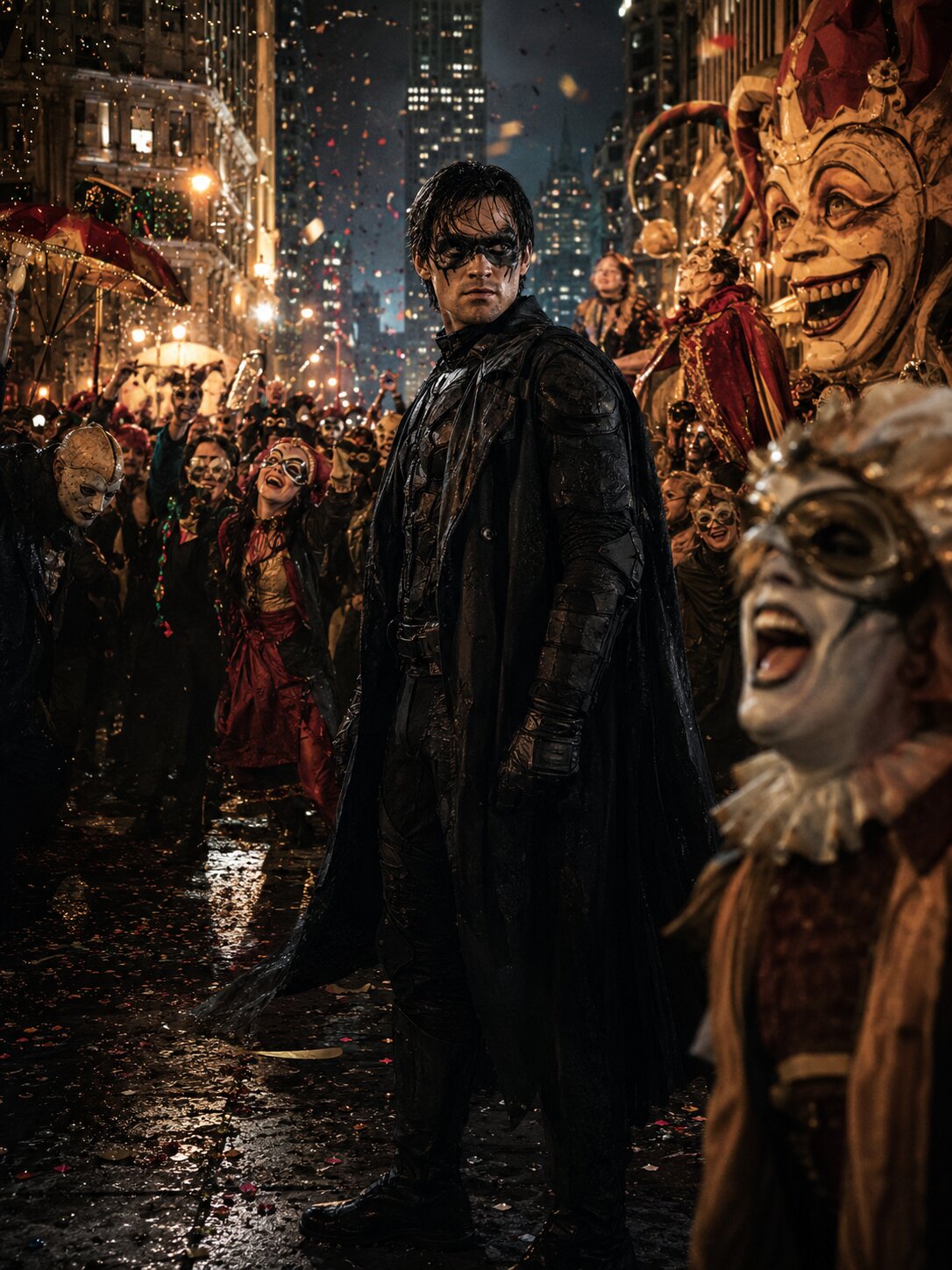
В исследовании рассматривается проблема трансформации супергеройского кинематографа в первой четверти XXI века и возрастающей популярности антигероя как центральной фигуры массовой культуры. Современный супергеройский фильм все чаще отказывается от классической модели нравственно совершенного героя, обращаясь к персонажам, действующим в пространстве этической неопределенности. Это требует переосмысления жанра как культурного механизма, отражающего кризис героического нарратива и изменение коллективного воображения. Массовая востребованность антигероических образов свидетельствует о глубинных сдвигах в культурном сознании современного общества, однако теоретическое осмысление этого феномена остается недостаточным. В частности, слабо изученным является вопрос о системном характере карнавальных стратегий в супергеройском жанре. Цель исследования — выявить механизмы карнавализации в современном супергеройском кинематографе на материале фильмов «Дэдпул» (2016), «Джокер» (2019) и «Хищные птицы» (2020), определив специфику антигероя как фигуры культурной трансгрессии посредством обращения к теории карнавала М. М. Бахтина. В результате анализа установлено, что антигерои указанных фильмов последовательно реализуют ключевые категории бахтинского карнавального мироощущения (гротескную телесность, профанацию, эксцентричность, инверсию иерархий), функционируя как фигуры культурной трансгрессии, дестабилизирующие господствующие нарративы о героизме, маскулинности и социальном порядке. Это позволяет жанру обновляться через символическое подрывание собственных оснований, однако при этом карнавальность носит амбивалентный характер, т. к. соединяет критический потенциал с включенностью в логику коммерческого производства. Показано, что карнавализация жанра является системной культурной логикой, не сводимой к отдельной студии или франшизе. Сделан вывод о том, что антигерой выступает как культурный симптом состояния, при котором невозможны ни полное принятие, ни радикальное отрицание существующего порядка; он удерживает массовую культуру в продуктивном режиме иронической относительности и диалогичности. Статья адресована исследователям в области культурологии, философии культуры, киноведения и медиаисследований.
Библиографические ссылки
Adams, A. A., Ben-Youssef, F., Schneier, B., & Murata, K. (2020). Superheroes on Screen: Real Life Lessons for Security Debates. Security Journal, 33(4), 565–582. https://doi.org/10.1057/s41284-019-00193-7
Andika, S. A., & Setyawan, A. H. (2024). Analysis of Swearing Words in Movie Birds of Prey (And The Fantabulous Emancipation of One Harley Quinn). Jurnal Ilmiah Wahana Pendidikan, 10(24), 601–611.
Atthoriq, F. Z. (2024). Deadpool’s Resistance Against the Hegemonic Power as Represented in the Movie Deadpool (2016) [S1 thesis, Universitas Muhammadiyah Purwokerto]. https://repository.ump.ac.id/17290/
Bakhtin, M. M. (1963). Problems of Dostoevsky’s Poetics. Eksmo. (In Russian).
Bakhtin, M. M. (1990). Rabelais and His World. Khudozhestvennaya Literatura. (In Russian).
Bereznyakov, D. V. (2012). Protest political activity in the contemporary Russian Internet environment: A possible interpretation. Vestnik NSU. Series: History and Philology, 11(6), 57–62. (In Russian).
Brake, M. (2024). Deadpool as Philosophy: Using Humor to Rebel Against the System. In D. A. Kowalski, C. Lay, & K. S. Engels (Eds.), The Palgrave Handbook of Popular Culture as Philosophy (pp. 967‑981). Springer International Publishing. https://doi.org/10.1007/978-3-031-24685-2_42
Brown, J. (2021). A City Without a Hero: Joker and Rethinking Hegemony. New Review of Film and Television Studies, 19(1), 7–18. https://doi.org/10.1080/17400309.2020.1864177
Brown, J. A. (2016). The Modern Superhero in Film and Television. Routledge. https://doi.org/10.4324/9781315708980
Burke, L. (2021). Harley Quinn and the Carnivalesque Transformation of Comic Book Fandom. Transformative Works and Cultures, 36. https://doi.org/10.3983/twc.2021.2015
Butler, J. (2022). Gender Trouble. V-A-C Press. (In Russian).
Clarke, K. (2024). “Diamonds Are a Girl’s Best Friend”? Tracing the Implications of a Song in Cathy Yan’s Birds of Prey (and the Fantabulous Emancipation of One Harley Quinn). Feminist Media Studies, 24(3), 448–463. https://doi.org/10.1080/14680777.2023.2200527
Cocca, C. (2016). Superwomen: Gender, Power, and Representation. Bloomsbury Publishing USA. https://doi.org/10.5040/9781501316609
Costello, M. J., & Worcester, K. (2014). The Politics of the Superhero: Introduction. Political Science and Politics, 47(1), 85–89. https://doi.org/10.1017/S1049096513001625
Day, K. A. (2015). Crazier than Sack of Ferrets!: Deadpool as the Post-Watchmen Superhero [Masters Theses, Virginia Tech]. http://hdl.handle.net/10919/75308
DiPaolo, M. (2011). War, Politics and Superheroes: Ethics and Propaganda in Comics and Film. McFarland, Incorporated, Publishers.
Doidge, S., & Rosenfeldt, A. (2022). Send in the Clowns: Joker, Vigilante Films, and Populist Revolt. In S. Redmond (Ed.), Breaking Down Joker: Violence, Loneliness, Tragedy (pp. 65–78). Routledge. https://doi.org/10.4324/9781003171300
Eagleton, T. (1981). Walter Benjamin, or, Towards a Revolutionary Criticism. Verso Editions and NLB.
Eco, U. (2007). From play to carnival. In Turning Back the Clock: Hot Wars and Media Populism (pp. 54‑57). Eksmo. (In Russian).
Freire, A., & Vidal-Mestre, M. (2022). The Concept of Antihero or Antiheroine in Contemporary Audiovisual Transmedia. Cuadernos.Info, (52), 246–265. https://doi.org/10.7764/cdi.52.34771
Geczy, A., & Karaminas, V. (2019). ‘Daddy’s Lil Monster’: Suicide Squad, Third-Wave Feminism and the Pornification and Queering* of Harley Quinn. Film, Fashion & Consumption, 8(2), 171‑188. https://doi.org/10.1386/ffc_00005_1
Ghorab, A., & Harize, O. (2022). Resisting Tyranny with Laughter: Joker and the Arab Revolutions. In S. Redmond (Ed.), Breaking Down Joker: Violence, Loneliness, Tragedy (pp. 90–103). Routledge. https://doi.org/10.4324/9781003171300
Granata, F. (2024). Experimental Fashion. New Literary Observer. (In Russian).
Gray, R. J., & Kaklamanidou, B. (Eds.). (2011). The 21st Century Superhero: Essays on Gender, Genre and Globalization in Film. McFarland.
Greenwood, D., Ribieras, A., & Clifton, A. (2021). The Dark Side of Antiheroes: Antisocial Tendencies and Affinity for Morally Ambiguous Characters. Psychology of Popular Media, 10(2), 165–177. https://doi.org/10.1037/ppm0000334
Hammonds, K. (2021). The Globalization of Superheroes: Diffusion, Genre, and Cultural Adaptations. In K. Hammonds, Oxford Research Encyclopedia of Communication. Oxford University Press. https://doi.org/10.1093/acrefore/9780190228613.013.1112
Howell, A. (2021). “I Didn’t Know If I Even Really Existed. But I Do”: Music, Dance, and the Performance of Male Identity in Joker. New Review of Film and Television Studies, 19(1), 78–88. https://doi.org/10.1080/17400309.2020.1861880
Hoy, M. (1992). Bakhtin and Popular Culture. New Literary History, 23(3), 765–782. https://doi.org/10.2307/469229
Hutabarat, N. S., Lubis, F. M., & Oxcygentri, O. (2020). Analysis of the Meaning of Masculinity in Birds of Prey. International Journal of Multi Science, 1(8), 66–81.
Irigaray, L. (1985). This Sex Which Is Not One. Cornell University Press.
Javanian, M. H., & Rahmani, F. (2021). Killing Joke: A Study of the Carnivalesque Discourse in Todd Phillips’ Joker. Bakhtiniana: Revista de Estudos Do Discurso, 16(3), 39–56. https://doi.org/10.1590/2176-457349985
Jürgens, A.-S., Fiadotava, A., & Clitheroe, C.-L. (2024). Vaude-Villain and Violent Funster: Harley Quinn and Humour. Journal of Graphic Novels and Comics, 15(6), 842–861. https://doi.org/10.1080/21504857.2024.2330587
Kuryel, A. (2022). Looking at and with images: Crowds in Joker, Joker in the crowd. In S. Redmond (Ed.), Breaking Down Joker: Violence, Loneliness, Tragedy (pp. 78–90). Routledge. https://doi.org/10.4324/9781003171300
Mulvey, L. (2000). Visual pleasure and narrative cinema. In E. I. Gapova & A. R. Usmanova (Eds.), An Anthology of Gender Theory (pp. 280–296). Propilei. (In Russian).
Nur, D. L., & Rosida, A. (2020). An Analysis of Slang Words in “Deadpool 2” Movie Directed by David Leitch. Journal of Advanced English Studies, 3(2), 113–123. https://doi.org/10.47354/jaes.v3i2.90
Perreault, T. (2023). Rise of the Anti-Hero: Comparison of Moral Ambiguity in Films. UF Journal of Undergraduate Research, 25. https://doi.org/10.32473/ufjur.25.133438
Pretty Sitanggang, M. A., Setia, E., & Ganie, R. (2020). Dysphemism Used in Deadpool Movie Paper Title. Lire Journal (Journal of Linguistics and Literature), 4(2), 125–139. https://doi.org/10.33019/lire.v4i2.73
Qodarain, H. L. (2021). Redefining Femininity: Revealing Harley’s Struggle to Exercise Agency in Movie “Birds of Prey.” LITERA KULTURA: Journal of Literary and Cultural Studies, 9(1), 9–17.
Radin, P. (1999). The Trickster: A Study in American Indian Mythology, with Commentaries by C. G. Jung and K. Kerényi. Eurasia. (In Russian).
Russo, M. J. (1995). The Female Grotesque: Risk, Excess, and Modernity. Psychology Press.
Stam, R. (1989). Subversive Pleasures: Bakhtin, Cultural Criticism, and Film. Johns Hopkins University Press.
Syahla, D., & Hartati, S. (2023). Types of Swearing Words Used by The Characters In Birds of Prey. LADU: Journal of Languages and Education, 3(3), 107–113. https://doi.org/10.56724/ladu.v3i3.136
Takovski, A. (2019). Coloring Social Change: Humor, Politics, and Social Movements. Humor, 33(4), 485–511. https://doi.org/10.1515/humor-2019-0037
Wang, K., & Cao, Q. (2025). Superhero Movies and Hollywood Decline: The Influence of Economic Environments. Advances in Economics, Management and Political Sciences, 246(1), 139–145. https://doi.org/10.54254/2754-1169/2025.GL30777
Wang, Z. (2023). Popular Anti-heroes: Origin, Changes, and Influences. Communications in Humanities Research, 3(1), 1083–1088. https://doi.org/10.54254/2753-7064/3/2022796
Wilson, C., & Piatti-Farnell, L. (2023). Re-Examining Superhero Politics in Popular Culture. Australasian Journal of Popular Culture, 12(1), 3–7. https://doi.org/10.1386/ajpc_00064_2
Yogerst, C. (2017). Superhero Films: A Fascist National Complex or Exemplars of Moral Virtue? Journal of Religion & Film, 21(1). https://doi.org/10.32873/uno.dc.jrf.21.01.37
Yulianti, A. P. (2023). Impoliteness Strategies Representing Power Relations in Birds of Prey Movie [Thesis, Universitas Islam Negeri Maulana Malik Ibrahim]. http://etheses.uin-malang.ac.id/59983/
* - In the Russian Federation, the “international LGBT social movement” has been designated an extremist organization | В Российской Федерации «международное общественное движение ЛГБТ» признано экстремистской организацией

Это произведение доступно по лицензии Creative Commons «Attribution» («Атрибуция») 4.0 Всемирная.
Copyright (c) 2026 Кучерова Анастасия Валерьевна