
Keywords
Models
Caspian Region
Russia
Kazakhstan
Turkmenistan
Iran
Azerbaijan
Modernization
Integration
How to Cite
Abstract
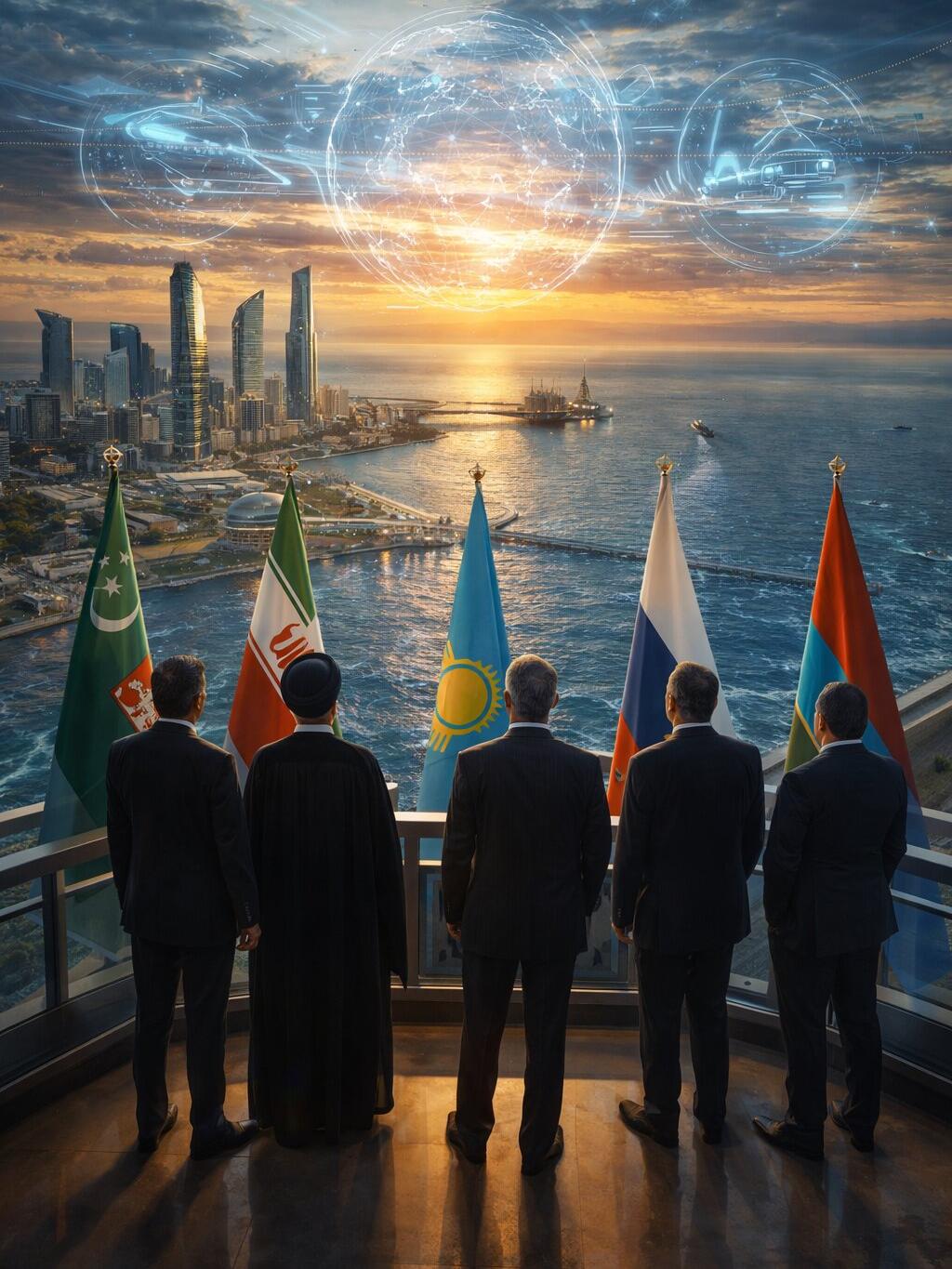
The modern Caspian region represents a unique intersection of global, national, and civilizational trajectories, where the formation of ideas about the future becomes not only a strategic but also a cultural and identification process. The problem raised in this study is the lack of a systematic analysis of how images of the future, reflecting value-based, technological, and integration orientations, are constructed in the national research discourses of the Caspian states (Russia, Kazakhstan, Azerbaijan, Turkmenistan, and Iran). Despite the existence of a significant number of works on the geopolitics and economics of the region, the phenomenon of the “image of the future” as a tool of societal and cultural self-identification remains fragmentary. As part of this study, the authors conducted a comprehensive comparative analysis of official and scientific-expert discourses about the future in the countries of the Caspian region in order to identify their structural models and assess their role in the formation of strategic guidelines, political and cultural identity, and regional interaction among the states of the macroregion.
This article identifies three interrelated models that allow for a comprehensive analysis of discourse on the future in the countries of the Caspian macroregion: a technological model, focused on innovation and modernization; a civilizational-identity model, emphasizing cultural and spiritual self‑preservation; and an integration model, aimed at strengthening regional and intercivilizational ties. Their interrelationship creates a special type of “conservative-modernization future,” in which development is viewed through the prism of value continuity and strategic autonomy. The study's findings emphasize that analyzing discourses on the future allows us to understand the mechanisms of reproducing power, identity, and strategic thinking in the region. The article is intended for researchers in the fields of political science, sociology, cultural studies, and international relations, as well as for specialists dealing with issues of regional forecasting and strategic planning.

This work is licensed under a Creative Commons Attribution 4.0 International License.
Copyright (c) 2026 Anna P. Romanova, Maria M. Fedorova