
Ключевые слова
постчеловек
трансгуманизм
гуманизм
Warhammer 40 000
космодесантники
Вархаммер
Адептус Астартес
человек
transhuman space
Как цитировать
Аннотация
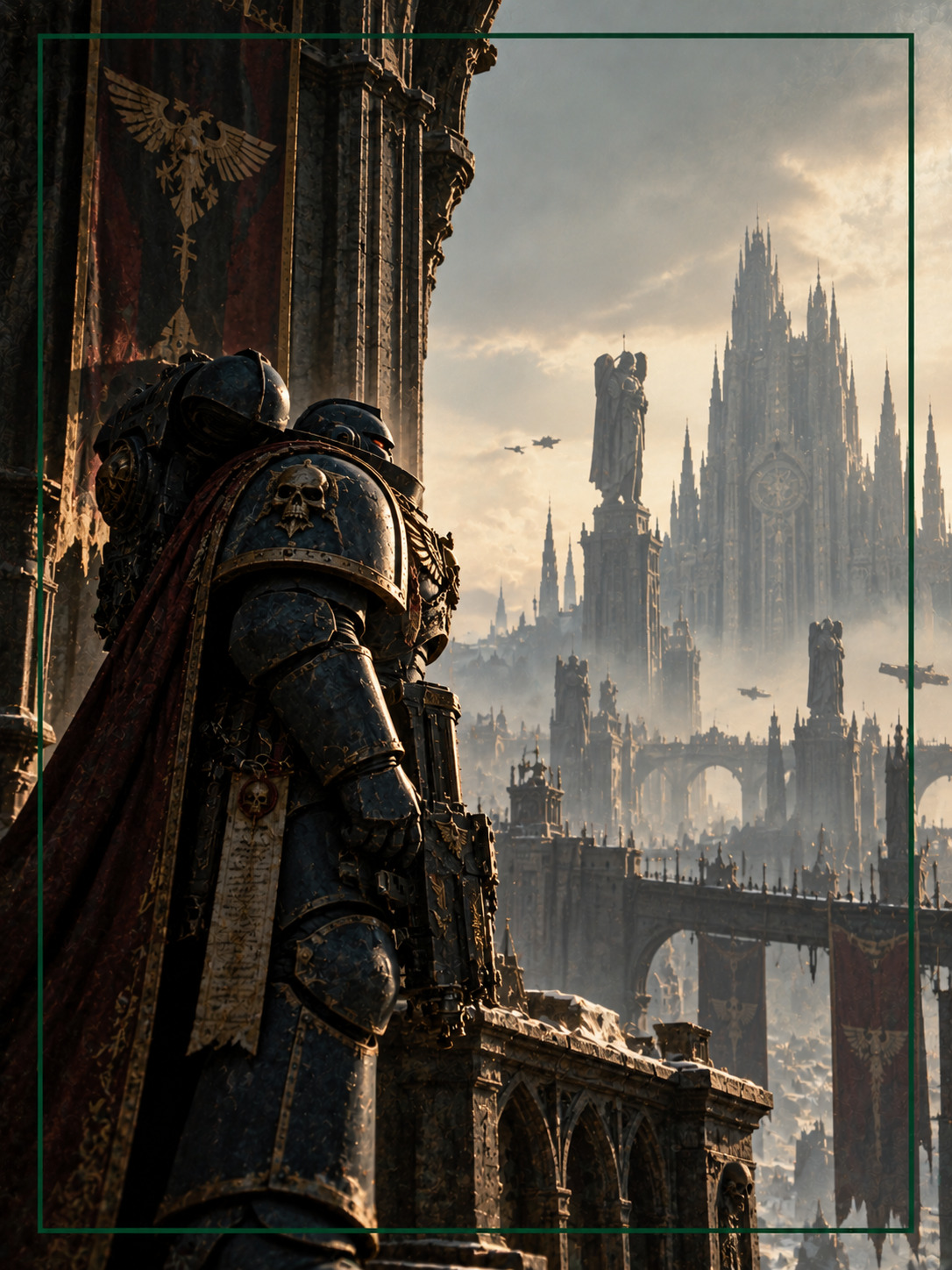
В статье рассматривается образ космодесантника (Adeptus Astartes) как воплощение идеала трансчеловека во вселенной Warhammer 40 000 и как одна из разновидностей трансчеловека в рамках авторской концепции transhuman space, используемой в качестве зонтичного термина. Проблематизируется образ Adeptus Astartes как трансчеловека, а также анализируются понятия «постчеловек» и «человек» в рамках фэндома Warhammer 40 000. В соответствии с целью исследования сформулированы следующие задачи: (1) определить понятия «человек», «трансчеловек», «постчеловек», «трансгуманизм»; (2) проанализировать природу транслюдей — космодесантников в фантастической вселенной Warhammer 40 000; (3) сделать выводы о преемственности между современным человеком и трансчеловеком Warhammer 40 000 (WH40K). Для решения поставленных задач используются диалектический метод, сравнительный и критический подходы, а также методы массового опроса и анкетирования. Представлен экскурс в историю (лор) орденов космодесанта. Образ трансчеловека в фэндоме WH40K анализируется через призму философского направления трансгуманизма. Трансгуманизм определяется как философия, мировоззрение и международное движение, сторонники которого выступают за эволюцию человека средствами науки и техники, за преодоление четырёх данностей человеческого бытия: страдания, болезней, старости и смерти. Особое внимание уделяется аугментациям, имплантатам и интерфейсам трансчеловека-космодесантника. Трансчеловек трактуется как промежуточная ступень в процессе трансцендирования человека в постчеловека. В статье приводятся результаты тестового опроса и анкетирования, проведённых среди представителей фэндома Warhammer 40 000. По результатам исследования сделан вывод о том, что трансчеловек WH40K не соответствует «духу и букве» трансгуманизма по следующим причинам: (а) концепция такого трансчеловека предполагает возникновение нового вида социального неравенства; (б) образ трансчеловека носит милитаристский характер и неприменим в мирное время; (в) женщины исключаются из числа потенциальных транслюдей. Целевую аудиторию статьи составляют исследователи массовой культуры и трансгуманизма, философы, социологи и политологи, интересующиеся проблематикой соотношения человеческого, трансчеловеческого и постчеловеческого, а также читатели, заинтересованные в научном изучении фэндома Warhammer 40 000.
Библиографические ссылки
Bostrom, N. (2005). A History of Transhumanist Thought. Journal of Evolution and Technology, 14(1).
Braidotti, R. (2013). The Posthuman. Polity Press.
Dennett, D. C. (1988). Conditions of Personhood. In M. F. Goodman (Ed.), What is a Person? (pp. 145‑167). Humana Press..
Dialectics. (1983). In L. F. Ilyichev, P. N. Fedoseev, S. M. Kovalev, & V. G. Panov (Eds.), Philosophical Encyclopedic Dictionary (pp. 154–158). Sovetskaya Entsiklopediya. (In Russian).
Drexler, E. (1992). Nanosystems: Molecular Machinery, Manufacturing, and Computation. John Wiley & Sons.
Fedirko, M. V. (2020). The Specificity of the Dark Fantasy Genre. In Formation of the Professional Competence of a Philologist in a Multicultural Educational Environment: Proceedings of the III International Scientific and Practical Conference (pp. 280–283). (In Russian).
Fedorov, N. F. (1982). Works. Mysl’. (In Russian).
Fukuyama, F. (2004). Our Posthuman Future: Consequences of the Biotechnology Revolution. AST. (In Russian).
Gagarin, A. S. (2023). Existing and Transcending: Philosophical Interpretations. Review of Omsk State Pedagogical University. Humanitarian Research, (1), 9–14. https://doi.org/10.36809/2309-9380-2023-38-9-14 (In Russian).
Galev, R. V., & Ivanchenko, M. A. (2024). Bracketing Death: How Culture Sustains the Fear of immortality. Chelovek.ru, (19), 182–195. https://doi.org/10.32691/2410-0935-2024-19-182-195 (In Russian).
Gornovskii, A. O. (2018). Quasi-Religion: The Imperial Cult in the Warhammer 40,000 universe (79–87). (In Russian).
Hayles, N. K. (2005). My Mother Was a Computer: Digital Subjects and Literary Texts. Chicago Press. https://doi.org/10.7208/chicago/9780226321493.001.0001
Herbrechter, S. (2013). Posthumanism. A Critical Analysis. Bloomsbury Academic.
Illarionov, G. A. (2021). Game Religions and Game Transcendences. In The Secular Age: Challenges of Civilization (pp. 28–33). (In Russian).
Ivanchenko, M. A. (2024). Primary and Secondary Suffering in Psychiatry, Oncology, Buddhism, Transhumanism, and the Necessity of Its Overcoming. Galactica Media: Journal of Media Studies, 6(1), 244–273. https://doi.org/10.46539/gmd.v6i1.399 (In Russian).
Karmanova, S. A. (2023). Features of the Fantasy Genre in R. F. Kuang’s Trilogy The Poppy War. Filologiya v XXI veke, (2), 33–40. (In Russian).
Kerimov, T. Kh. (2018). Renewing Humanism: Its Possibilities and Limits. Izvestia. Ural Federal University Journal. Series 3: Social Sciences, 13(3), 16–26. (In Russian).
Lipinskaya, A. A. (2017). Dan Abnett’s Pariah: Playing with the Victorian novel. In The literary text of the 20th–21st centuries: Problems of poetics: Proceedings of the VII–VIII International Scientific and Practical Conference (pp. 75–80). (In Russian).
Lyotard, J. F. (1991). The Inhuman: Reflections on Time. Polity Press.
McClain Brown, C. (2024). Towards a Generic Fascism: Right-Wing Totalitarian Aspects in the Universe of Warhammer 40,000. Politička Misao, 61(2), 29–51. https://doi.org/10.20901/pm.61.2.02
Pivovarov, D. V. (2006). Philosophy of Religion. Akademicheskii Proekt; Delovaya kniga. (In Russian).
Roden, D. (2015). Posthuman Life. Philosophy at the Edge of the Human. Routledge Taylor & Francis Group. https://doi.org/10.4324/9781315744506
Roden, R. (2020). Posthumanism: Critical, Speculative, Biomorphic. In M. R. Thomsen & J. Wamberg (Eds.), The Bloomsbury Handbook of Posthumanism (pp. 81–94). Bloomsbury. https://doi.org/10.5040/9781350090507.ch-007
Sazeeva, I. B., & Grosheva, T. N. (2017). The Antihumanist Character of the Philosophy of Transhumanism. Historical, Philosophical, Political and Law Sciences, Culturology and Study of Art. Issues of Theory and Practice, (3–1), 122–126. (In Russian).
Sidenkova, A. P., Myakotnykh, V. S., & Ivanchenko, M. A. (2023). Interpreting the Essence of Dementia in the Context of the Debate Between Humanism and Transhumanism. Voprosy Filosofii, (2), 68–78. https://doi.org/10.21146/0042-8744-2023-2-68-78 (In Russian).
Silantyev, R. A. (2016). Theological Modeling Through the Literature of the Warhammer 40,000 Setting. Vestnik of Moscow State Linguistic University. Humanities, (23), 138–146. (In Russian).
Stavtseva, O. I. (2023). Posthuman: A concept or an Event? Reflections on the Future of the Human of the Anthropocene. Pushkin Leningrad State University Journal, (1), 8–20. https://doi.org/10.35231/18186653_2023_1_8 (In Russian).
Thacker, E. (2005). The Global Genome: Biotechnology, Politics, and Culture. MIT Press.
Tsvetkov, E. V. (2008). Science Fiction and Scientific Foresight. Vestnik of Northern (Arctic) Federal University. Series: Humanitarian and Social Sciences, (1), 49–54. (In Russian).
Turchin, A. V., & Batin, M. A. (2013). Futurology. The 21st century: Immortality or Global Catastrophe? Binom. Laboratoriya znanii. (In Russian).
Van Creveld, M. (2013). Wargames From Gladiators to Gigabytes. Cambridge University Press. https://doi.org/10.1017/CBO9781139579872
Vasiliev, E. V. (2021). Interpretation of Lucifer’s Image and the History of the Fall of the Angels in Aaron Dembski-Bowden’s Novel The First Heretic. In Ancient Contexts: Disciplinary and Interdisciplinary strategies: A collective Monograph (pp. 423–432). Natsional’nyi issledovatel’skii Nizhegorodskii gosudarstvennyi universitet im. N. I. Lobachevskogo. (In Russian).
Vasiliev, E. V. (2023). Rethinking the Image of the Cultural Hero in the Warhammer 40,000 Setting: The Case of Chris Wraight’s Novel The Lords of Silence. In Romano-Germanic literatures: Traditions and modernity: Proceedings of the 1st International Scientific Conference (pp. 111–117). Izdatel’skii tsentr Belorusskogo gosudarstvennogo universiteta. (In Russian).
Vostretsov, E. Yu. (2016). The Problem of the Religious Studies Status of the Phenomenon of “Fictional Religions”. In Philosophical Problems of Religion, Morality, Politics, and Law: Proceedings of the All-Russian Scientific and Practical Conference (p. 121). (In Russian).
Wilson, S., & Haslam, N. (2009). Is the Future more or less Human? Differing Views of Humanness in the Posthumanism Debate. Journal for the Theory of Social Behaviour, 39(2), 247–266. https://doi.org/10.1111/j.1468-5914.2009.00398.x
Wolfe, C. (2010). What is Posthumanism? Minnesota University Press.
Zvirevich, V. T. (2004). Philosophy of the Ancient World and the Middle Ages. Akademicheskii Proekt. (In Russian).

Это произведение доступно по лицензии Creative Commons «Attribution» («Атрибуция») 4.0 Всемирная.
Copyright (c) 2026 Иванченко Мария Антоновна, Вострецов Евгений Юрьевич