
Keywords
Mediology
Regis Debray
Conspirology
Russian Folk Tales
The Frog Princess
The Mistress of the Copper Mountain
Zmey Gorynych
Russian Animation
Patriotic Education
Ideology
How to Cite
Abstract
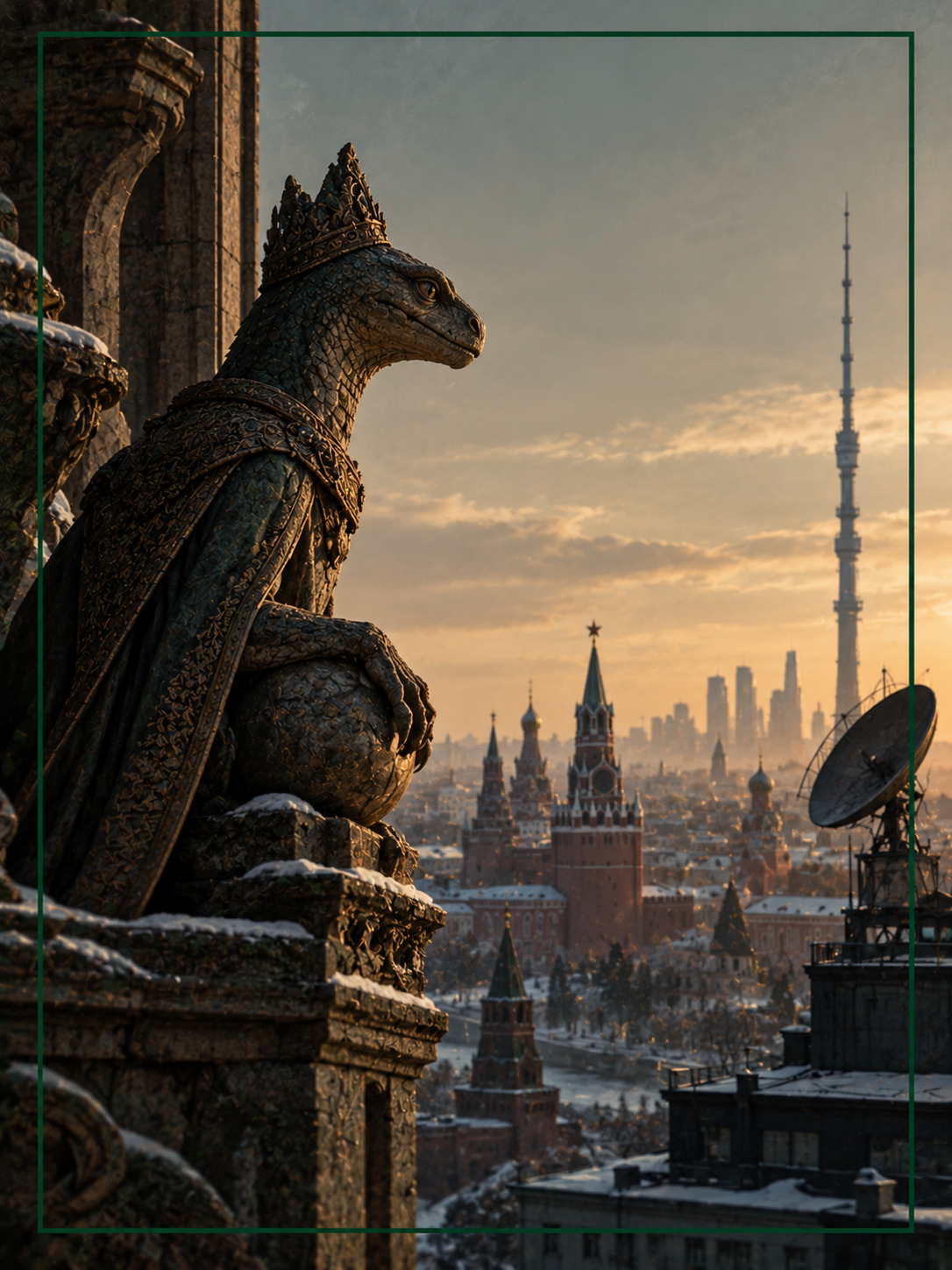
The article explores the evolution of the image of anthropomorphic reptiles across global and Russian media traditions, from archaic myths and folk tales to modern conspiracy theories and representations of reptilians in Russian popular culture, primarily in animated works. The study is relevant because the myth of reptilians has received insufficient scholarly attention in Russian academic discourse, despite its widespread presence in the media environment. The research is based on Régis Debray’s theory of mediology, which interprets media as material and symbolic mediators that ensure the longevity of cultural forms. Within this paradigm, fairy tales and animated series are analyzed as equivalent media that transmit systems of collective representations and values. The article concludes that the ancient mythological image has been repurposed by modern media to address contemporary ideological objectives. The aim of the study is to trace the evolution of the archaic mythological image of anthropomorphic reptiles and to identify the mechanisms underlying its transformation in the Russian media landscape, from folk tales to modern conspiracy narratives in youth animation. The article is intended for media studies scholars, specialists in mythology and cultural studies, philosophers, historians, political scientists, sociologists, psychologists, social architects, and media content producers.
References
Anshu. (2023). Recontextualizing the Narratives: Exploring Oppression and Genocides in the Mahabharata. The Creative Launcher, 8(4), 13–18. https://doi.org/10.53032/tcl.2023.8.4.02
Afanasyev, A. N. (1985). Russian Folk Tales (Vol. 2). Nauka. (In Russian).
Baranov, D. A., & Madlevskaya, E. L. (1999). The Image of the Frog in Embroidery and Mythopoetic Representations of the Slavs. In Woman and the Material World of the Culture of the Peoples of Europe and Russia (pp. 111–130). Peterburgskoe Vostokovedenie. (In Russian).
Barkun, M. (2013). A Culture of Conspiracy: Apocalyptic Visions in Contemporary America. University of California Press.
Bazhov, P. P. (1970). Ural Tales. Detskaya literatura. (In Russian).
Chulkov, M. (1786). An Abevega of Russian Superstitions, Idolatrous Sacrifices, Common Wedding Rites, Witchcraft, Shamanism, etc. Tipografiia u soderzhatelia F. Gippiusa. (In Russian).
Debray, R. (2009). Introduction to Mediology. Praksis. (In Russian).
Dobrynya and the Serpent. (1969). Detskaya literatura. (In Russian).
Douglas, K. M., Sutton, R. M., & Cichocka, A. (2017). The Psychology of Conspiracy Theories. Current Directions in Psychological Science, 26(6), 538–542. https://doi.org/10.1177/0963721417718261
Franz, M.-L. (2004). The Psychology of Fairy Tales: The Interpretation of Fairy Tales. B.S.K. (In Russian).
Herodotus. (2008). The Histories. Eksmo; Midgard. (In Russian).
Icke, D. (1999). The Biggest Secret: The Book That Will Change the World. David Icke Books.
Icke, D. (2001). Children of the Matrix. Bridge of Love Publications.
Jung, C. G. (1997). Psychology and Alchemy. REFL-buk; Vakler. (In Russian).
Kolosova, I. V. (2016). New Religious Movements in Russia and the CIS. Obozrevatel-Observer, (11), 19‑35. (In Russian).
Lewis, T., & Kahn, R. (2005). The Reptoid Hypothesis: Utopian and Dystopian Representational Motifs in David Icke’s Alien Conspiracy Theory. Utopian Studies, 16(1), 45–74. https://doi.org/10.2307/20718709
Malakhov, V. S. (2005). Nationalism as a Political Ideology. KDU; OAO Dom pechati – Vyatka. (In Russian).
Petrosyan, M. S. (2017). The Aztec Myth of the Sun in D. H. Lawrence’s Poetry. Philology. Theory & Practice, 8(1), 29–31. (In Russian).
Petrosyants, D. V. (2025). The Recirculation of Trigger Stories as a Method of Increasing Information Noise. Humanities and Social Sciences. Bulletin of the Financial University, 14(5), 81–89. https://doi.org/10.26794/2226-7867-2024-14-5-81-89 (In Russian).
Petrov, V. P., & Makarevich, M. L. (1963). The Scythian Genealogical Legend. Soviet Archaeology, (1), 20‑31. (In Russian).
Petukhov, Yu. (1991). Satanic Potion. Metagalaktika. (In Russian).
Petukhov, Yu. (2009). The Origins of the Rus’. Algoritm; Eksmo. (In Russian).
Prilutskiy, A. M. (2024). The Pragmatics of Conspiracy Mythologemes. Pushkin Leningrad State University Journal, (3), 124–135. https://doi.org/10.35231/18186653_2024_3_124 (In Russian).
Propp, V. Ya. (1986). The Historical Roots of the Wonder Tale. Izdatelstvo Leningradskogo universiteta. (In Russian).
Rank, O. (2020). The Myth of the Birth of the Hero. Akademicheskii proekt. (In Russian).
Shizhensky, R. V. (2022). “The Magic Army of Rus’” as an Example of the Paradox of the Neo-Pagan Pseudosimulacrum: Part I. Society: Philosophy, History, Culture, (9), 64–68. https://doi.org/10.24158/fik.2022.9.9 (In Russian).
Shulin, Ch. (2024). The Image of the Dragon in Chinese Culture. Political Linguistics, 1, 206–210. (In Russian).
Sidorova, S. E. (2022). A Serpent-Worshipping People Defending Sacred Relics: Nagpur and the Sacred Geography of Buddhism. Social Sciences and Humanities: Domestic and Foreign Literature. Series 9: Oriental and African Studies, (1), 74–88. https://doi.org/10.31249/RVA/2022.01.04 (In Russian).
Trynkina, D. A. (2013). The Magical Foxes of Japan. Moscow University Bulletin. Series 8: History, (4), 99–116. (In Russian).
Trynkina, D. A. (2014). Finns in the Mythological Tradition of the Peoples of Northern Scotland. Moscow University Bulletin. Series 8: History, (2), 77–98. (In Russian).
Vafin, A. M. (2024). In the Service of Security Agencies: The Ideology of Conservatism in American Mass Culture. Knowledge. Understanding. Skill, (1), 224–229. https://doi.org/10.17805/zpu.2024.1.17 (In Russian).
Vasina, E. V. (2019). V. M. Vasnetsov’s “Poem of Seven Fairy Tales”: Biographical Context and the Formulation of the Problem. Culture and Art, (6), 1–9. https://doi.org/10.7256/2454-0625.2019.6.29880 (In Russian).
Zhuchkova, A. V. (2014). The Image of the Frog as a Symbol of the Hero’s Inner Transformation in Russian and German Folklore. Bulletin of Slavic Cultures, 4, 107–115. (In Russian).

This work is licensed under a Creative Commons Attribution 4.0 International License.
Copyright (c) 2026 Artur M. Vafin